 |
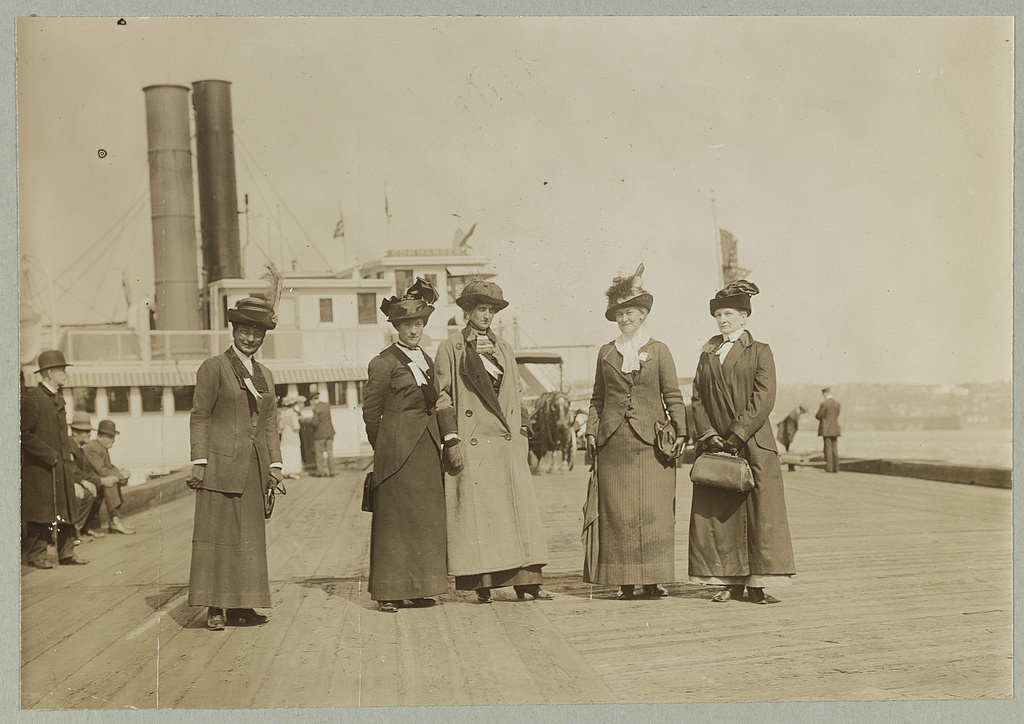
| SOURCE - Some of the anti-suffrage leaders who took people up the Hudson for their Decoration Day picnic: L to R: Mrs. George Phillips, Mrs. K. B. Lapham, Miss Burnham, Mrs. Everett P. Wheeler, Mrs. John A. Church. New York, 1913. |
The women’s suffrage movement of the late nineteenth and early twentieth
centuries marked a turning point for women’s rights across the nation resulting
in the passing of the 19th Amendment to the United States
Constitution. The narrative of women gathering in parlor rooms, protesting on
street corners, and coming together in comradery for the sake of
enfranchisement is lauded throughout history books and American culture,
however, the Suffrage Movement did not have a fully committed gender in support
of the cause as would be assumed. The Anti-Suffrage Movement was supported by
both men and women and resulted in staunch opposition to those in favor of
female suffrage. History paints this opposition in a feeble, self-obsessed,
male dominated and influenced light, wrapping their mission and motivation into
a narrative of repressed women too afraid or weak-willed to stand up for their
rights. Under the banner of feminism, historians have lauded the feats of
powerful women such as Margaret Sanger, Susan B. Anthony, and Elizabeth Cady
Stanton while at the same time dismissing the arguments of Josephine Dodge and
Helen Kendrick Johnson as simply the other side. To the extreme contrary,
however, the women who made up the Anti-Suffrage Movement were highly educated,
public serving, intelligent individuals who identified as agents of their own
fate and to describe them as anything else is a grave disservice and injustice
to their autonomy.

